The first question people ask when placing a print order is usually the wrong one: "After how many copies should I switch to offset?" There is no single numerical answer, because the threshold isn't set by quantity alone — the size of the job, the paper chosen and the product being printed all come into play together. The right question is which method's way of working actually suits this specific job.
Two methods, two different processes
In offset printing the image is first transferred to a plate — typically a thin aluminium sheet — which is wrapped around a press cylinder, and ink passes from there to the paper. Preparing that plate creates a one-off cost right at the start of the job, independent of how many copies will eventually be printed. Once the plate is set up, the press can pull as many prints from it as required.
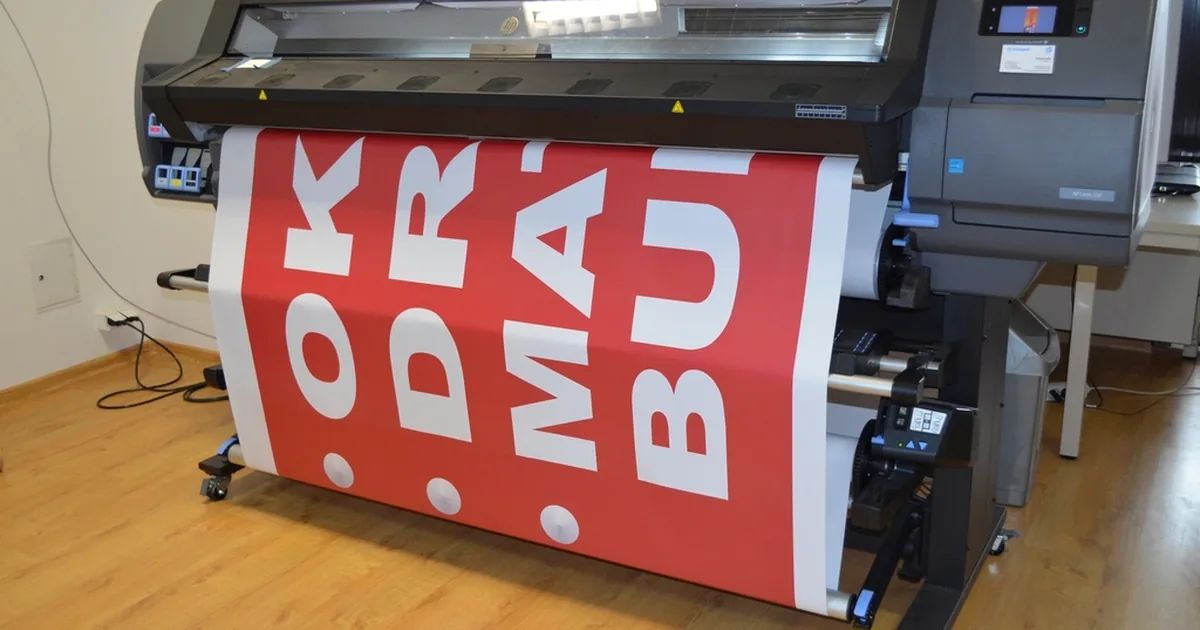
Digital printing has no such intermediate stage. The file goes straight to the printer, and each page is formed instantly and independently through toner or inkjet. With no plate, there is no set-up cost either; whatever is sent to the machine is what gets printed, whether it is identical to the last page or completely different.
This structural difference is the source of everything that follows — from the cost curve to colour consistency, variable data and reprint flexibility.
Why cost behaves differently
In offset, part of the total cost is fixed (the plate) and part rises with quantity (paper, ink, press time). Because the fixed part is spread across the whole run, its share per copy shrinks as quantity rises, and the unit cost falls. At low quantities, that same fixed cost is divided among fewer copies, so the unit price stays high.
Digital has almost no fixed set-up cost. Because each copy costs much the same as the last, the unit price does not drop meaningfully as quantity changes — the curve stays close to a flat line. That makes digital the stronger option at low volumes, but it falls behind offset at high volumes, since offset dilutes its fixed cost further while digital stays flat.
Why the threshold isn't a fixed number
There is a point where the two curves cross: below it digital works out cheaper, above it offset does. But that crossing point shifts even within a single product — three things move it.
- Product: the plate or form set-up for a multi-signature job like a catalogue carries far more weight than the set-up for a single-sheet label. The more complex the set-up, the larger offset's fixed cost, and the higher the threshold sits.
- Size: how many copies fit on a single press sheet depends on dimensions. A small business card fits many to a sheet, while a larger invitation or a wide brochure leaves room for far fewer — which changes the cost per sheet and, with it, the threshold.
- Paper: an unusual weight, a textured surface, or an out-of-standard stock behaves differently under each method. Some surfaces give limited results on a digital press, while an offset form comfortably covers a wide range of stocks; that gap in compatibility pushes the threshold up or down.
A fixed number handed out without weighing these three together — "offset makes sense past this quantity" — doesn't reflect reality; every job carries its own threshold.
Colour consistency and variable data
Stability across a long run is where offset is strong. The ink recipe carried by the plate stays the same throughout the run, so tonal drift across hundreds or thousands of copies is limited. Digital's toner or ink feed can be affected over time by heat and humidity; invisible on a short job, but on a long run the first copy and the last can show a slight shift in tone. That matters when several parts of a corporate identity — a letterhead, a business card, a catalogue — need to stay consistent with each other.
Digital's counterweight is variable data. Offset repeats the same image from a fixed plate, so every copy is identical; the plate logic doesn't allow for variation. Digital generates each page independently from the file, so two consecutive copies can carry entirely different information: a ticket with an advancing sequence number, an invitation personalised per guest, or labels each carrying a different barcode. That kind of job needs an added numbering step and extra cost on offset, whereas on digital it is a standard part of production.
Finishing, proofing and reprints
Finishes such as embossing, foiling or custom die-cutting are added as a separate stage after printing on either method, independent of which one was used. That said, some surface coatings can affect how well toner bonds, so paper choice for digital needs to account for that — otherwise the toner may not sit fully on the surface.
Proofing logic on a small run also shifts with the method. On digital, printing a single copy to see the real result is nearly free, since there is no plate to set up. On offset, seeing the actual printed colour requires the plate to already be in place; a digital proof pulled beforehand gives an approximation of colour, not a guarantee.
Reprint flexibility also differs by method. On digital, there is no plate to store, so the file stays ready and a small correction can go straight back into production. An offset plate can be kept, but storing and retrieving it is its own process; if it has worn out or been discarded, the plate cost returns from scratch. For a job reprinted often with small updates, that difference carries a weight it doesn't carry for a single one-off run.
The cost of choosing wrong
A cost mistake is possible in either direction. Committing a low-quantity job to offset means taking on a plate cost unnecessarily — the same job on digital, without a plate, would likely come out cheaper, and the money spent on the plate isn't recovered. In the opposite case, sticking with digital for a high-quantity job keeps the unit price flat and the total cost needlessly high, when switching to offset could have delivered a real saving per copy.
The right approach, then, is to judge the job not by a single quantity figure but by the product itself, its size, the paper chosen, how much colour consistency it demands, and whether it needs variable data. A business card and a catalogue, a set of labels and a run of invitations, don't share the same threshold — each carries its own production logic, and the right method follows from looking at those specifics.