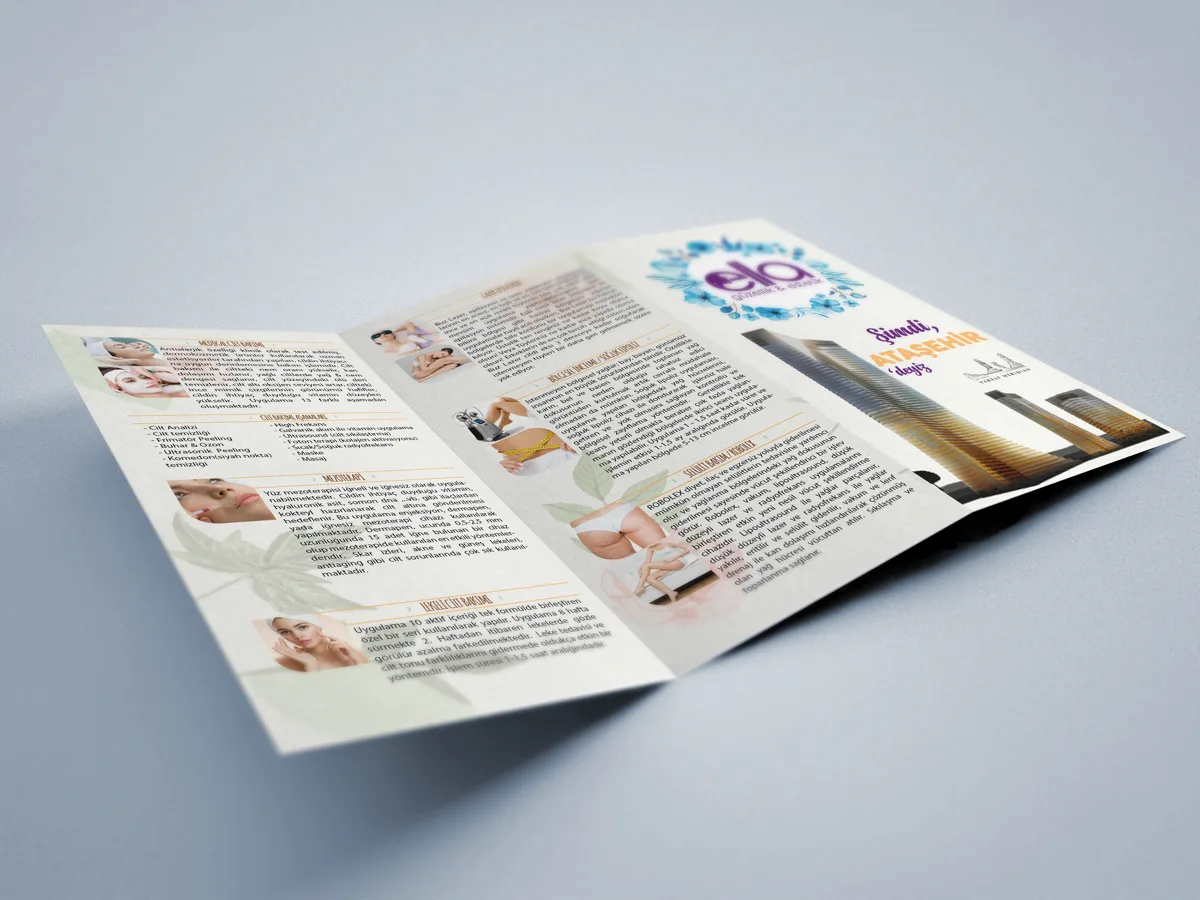
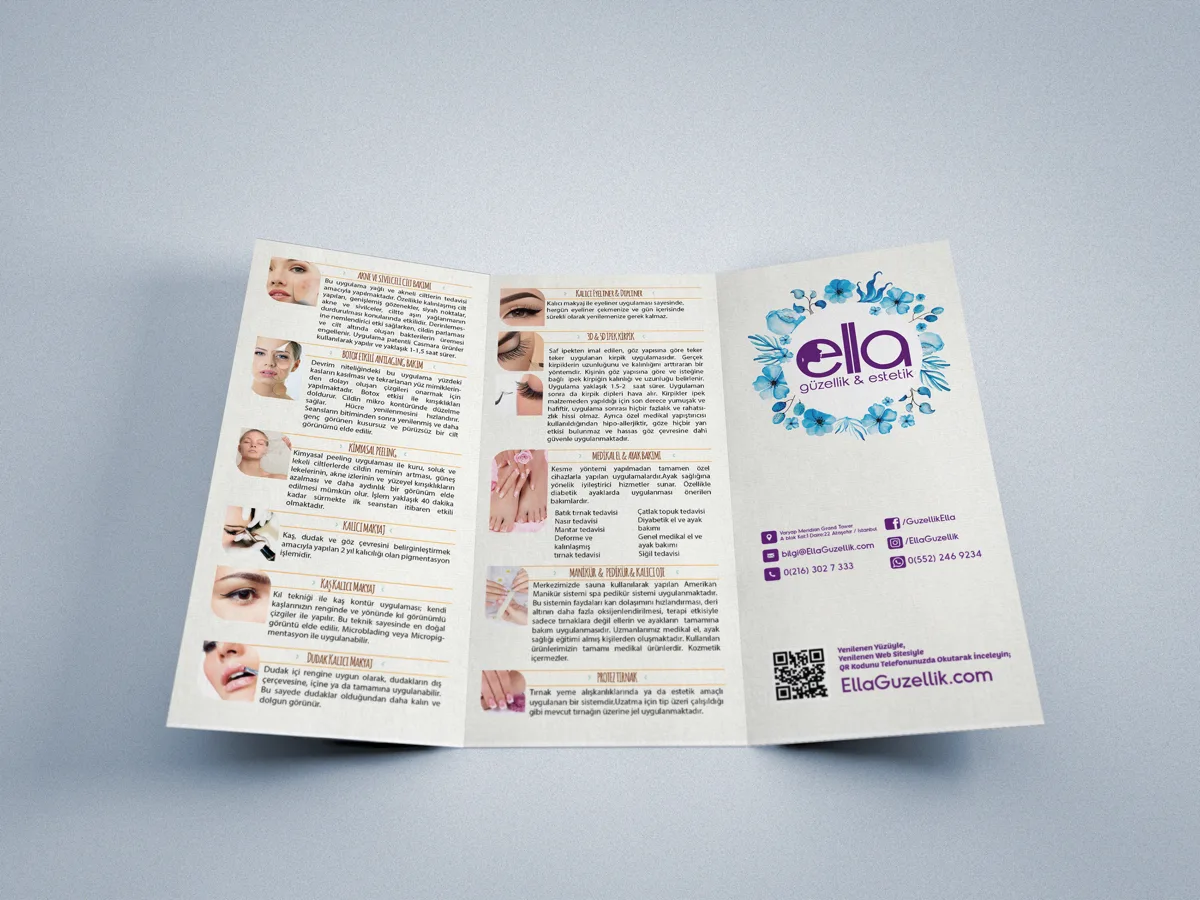
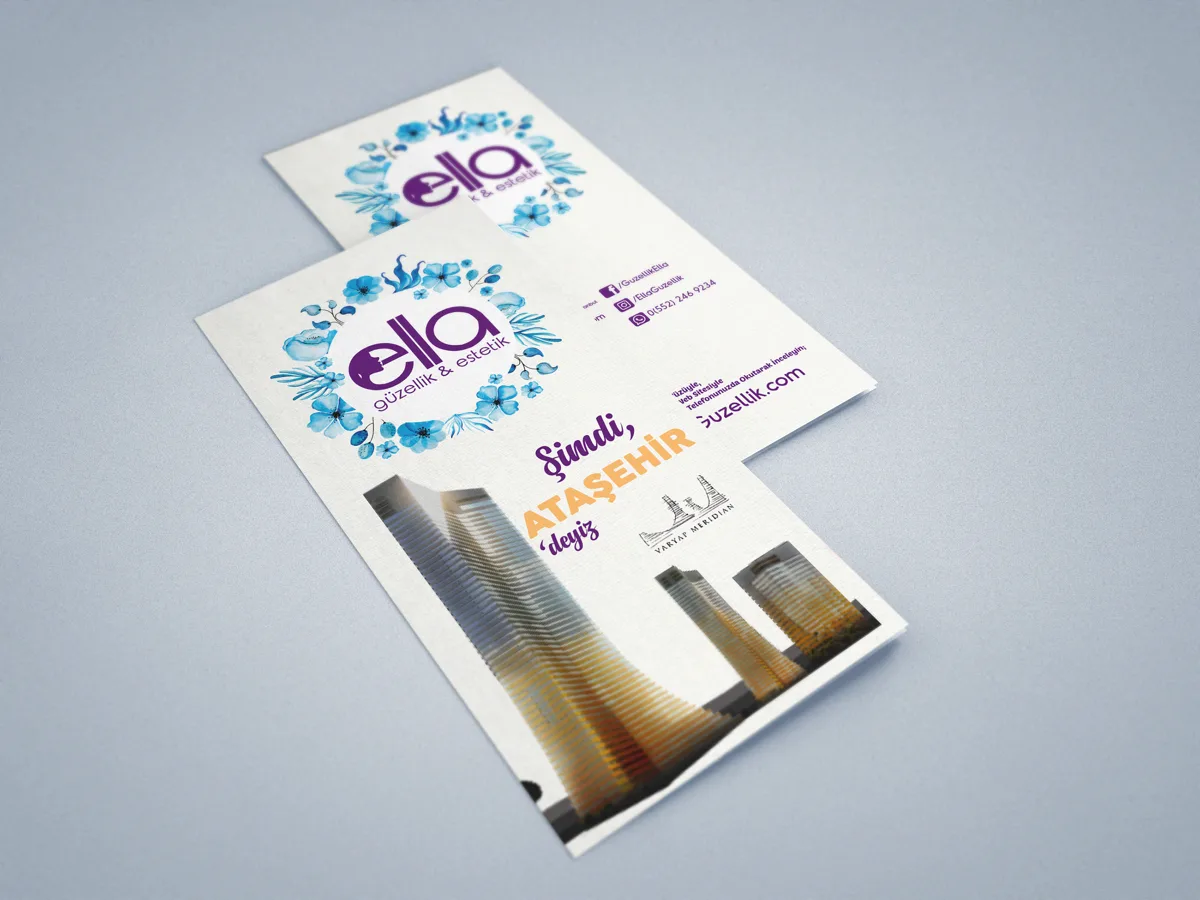
The first decision in a brochure is how many folds it carries. In a two-fold concertina the reader opens the panels in sequence, so the order of the message becomes physical: the cover raises a question, the inside explains, the back asks for action. In a roll fold the inner panels cannot share the same width — the panel that tucks inside must be cut a few millimetres narrower or it will not close.
Copy density is set by the folded size rather than the flat one. A layout that looks generous when open can compress into a third of that reading area once closed. Proofing the design in its folded state exposes this early, where a screen preview does not.
Distribution decides the material. Where 150gsm is enough for a brochure handed over in person, a piece left on a stand and expected to survive for days justifies heavier stock and a laminated surface.
Weight decides how a sheet folds. Stock between 135 and 170gsm folds cleanly, while anything above 250gsm cracks along the crease and shows as a white line across a coloured area. Scoring the sheet before folding prevents this, and it has to be planned from the start when working with heavier paper.
The closed size follows the distribution channel. A brochure going out by post must fit a standard envelope when folded; one destined for a display pocket should sit a few millimetres narrower than the pocket. For hand distribution, sizes that open with one hand are preferred over the larger formats used for desk drops.
Technical options
- Common sizes
- A4 (flat), A5 and DL (folded)
- Folds
- Single, concertina, roll fold, gate fold
- Stock
- 135–200gsm coated, matt or gloss
- Finishes
- Lamination, varnish, creasing and die-cut
Related services
Frequently asked
How many folds should a brochure have?
The number of subjects decides it. A single fold is enough for one service; where you are describing a three-stage process, a concertina establishes the sequence naturally.
Why does the fold line crack?
It shows on heavier stock and where dark solids meet the fold. Creasing before folding, and shifting dark areas away from the fold line, removes the problem.
Is a short print run of brochures worthwhile?
Digital printing makes short runs viable because there is no plate cost. As quantity rises, offset overtakes it; where that threshold sits depends on the size and stock of the job.
Which format should a brochure use?
The most common is an A4 sheet folded in three: the closed size is 99 × 210 mm, which slips comfortably into a standard 110 × 220 mm DL envelope, making it suitable for postal distribution. For desk drops or display stands, A5 and A4 closed formats are preferred.
How many pages can a brochure have?
In folded brochures the page count is limited by the fold: two creases give six faces, three give eight. When more content is needed, the job moves from folding to a saddle-stitched booklet.
When is a brochure order delivered?
The printing itself is quick; what really sets the schedule is the folding. Scoring and folding are a separate operation that queues in busy periods. If the chosen paper weight is not in stock at that moment, sourcing is added on top. Settling the stock and the fold type at the start is therefore what settles the delivery date at the start.
What happens when brochures go out to more than one city?
A folded brochure takes up more space than its weight suggests, and carriage is priced on volume before weight. Where distribution runs from a single point, producing centrally and sending from there keeps things simple. Where it spreads across several cities, sharing the print-ready file avoids moving the same job twice.
What is a brochure proof actually checked against?
The real check here is the folding sequence rather than colour. Pages that look correctly ordered on screen can open in an unexpected order once folded. A blank mock-up, folded for real, therefore shows what a digital proof cannot: which face the reader sees at which moment.
How should I prepare the brochure file?
Fold lines should be marked on their own layer rather than drawn over the artwork, since they must not appear in print. The second point is panel width: a panel that folds inwards will stick out past the edge if it is drawn the same size as the others, so it is set slightly narrower.
Should I print a flyer or a brochure?
They do different jobs. A flyer is a single unfolded sheet: low unit cost, suited to handing out or inserting into a newspaper, and read in seconds. A brochure folds, so it carries more and tends to stay on a desk longer. Content rather than budget decides: announcing needs one sheet, explaining needs the fold.