The detail that decides a business card is usually not the design but the stock. A card under 300gsm feels flimsy in the hand; the 350–400gsm range holds its shape even after a pocket. Matt lamination resists fingerprints and softens the touch, while gloss deepens colour but shows marks.
Finishes here are a tool of hierarchy rather than decoration: spot gloss applied only to the logo lifts it off a matt field. Embossing and foiling do the same work through relief and shine. These effects earn their place when planned with the design, and usually crowd it when added afterwards.
Leaving the reverse blank is a common waste. The back gives room for a QR code, a short list of services or a single positioning sentence — it is usually this side that turns a card from a contact detail into a reminder.
Three measurements decide a press-ready file: 2–3mm of bleed beyond the trim line, a safe margin of at least 4mm inside the edge, and 300 dpi resolution. A phone number that sits inside the safe margin comes back half cut when the guillotine drifts by a hair. Colours must be prepared in CMYK; an RGB file built for screen prints flatter and duller than expected.
Quantity decides both the method and the unit cost. Up to a few hundred pieces digital printing is fast and economical; as volume rises, offset spreads its plate cost and the unit price starts to fall. For a two-person team the gap between 100 and 1,000 cards is often smaller than assumed, so estimating the real need up front pays off.
The cut shape affects how long a card survives. A square corner is the common choice, but corners are the first thing to wear in a pocket or wallet; a rounded cut delays that wear and gives the card a different silhouette. Custom die-cutting needs a form, which pushes cost up at low volumes; it makes sense when planned as part of the identity, not as a one-off experiment.
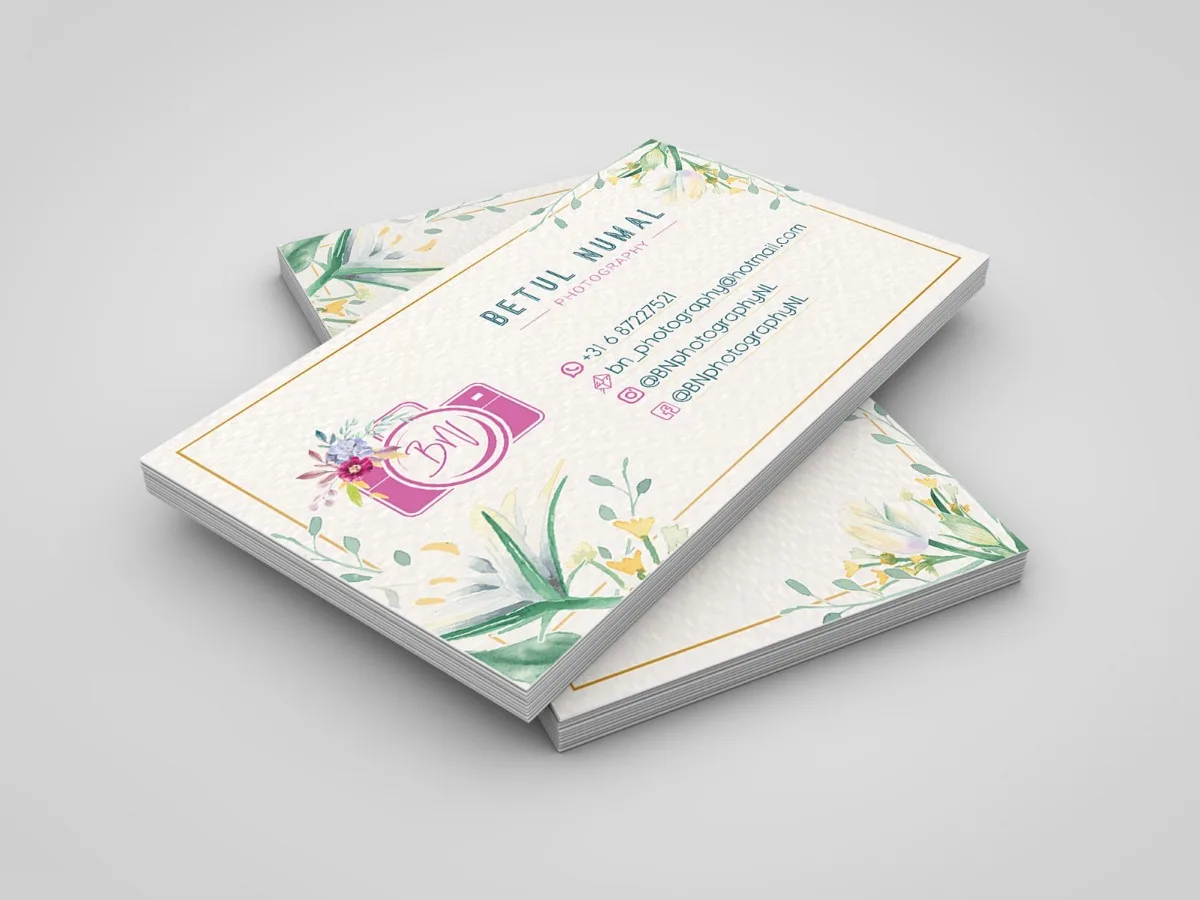
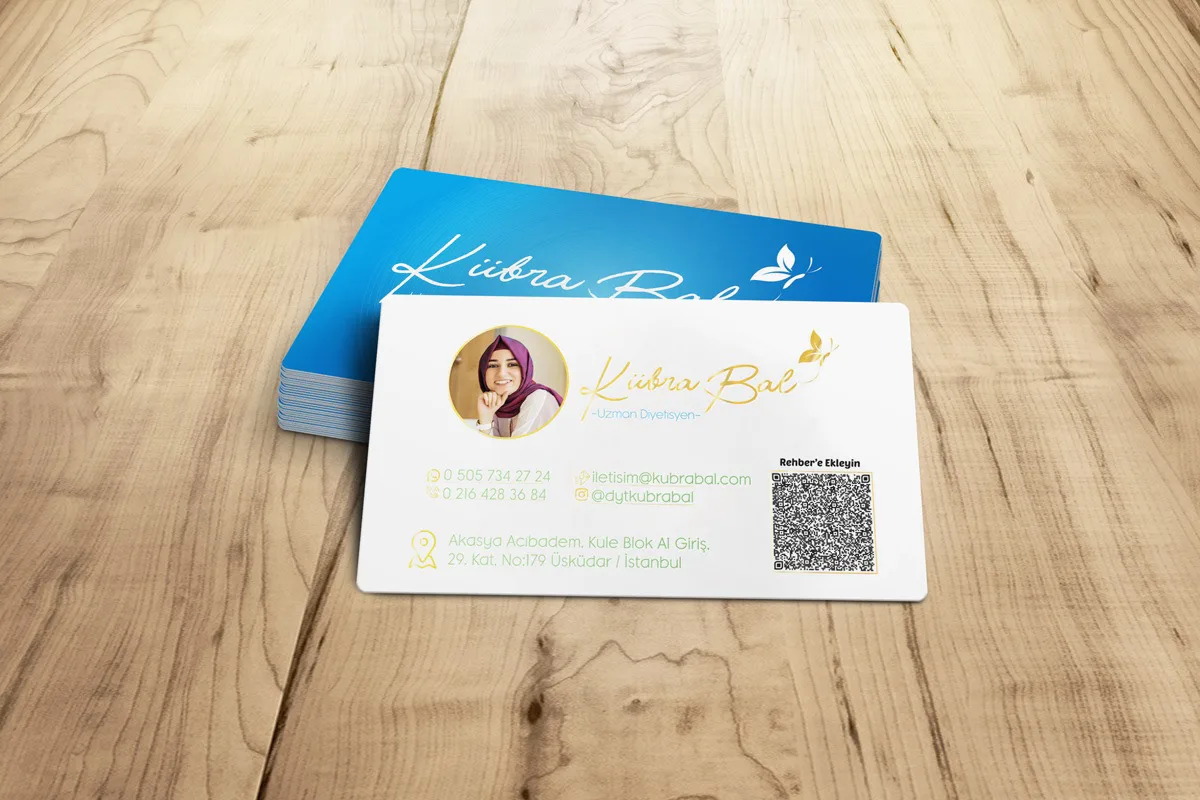
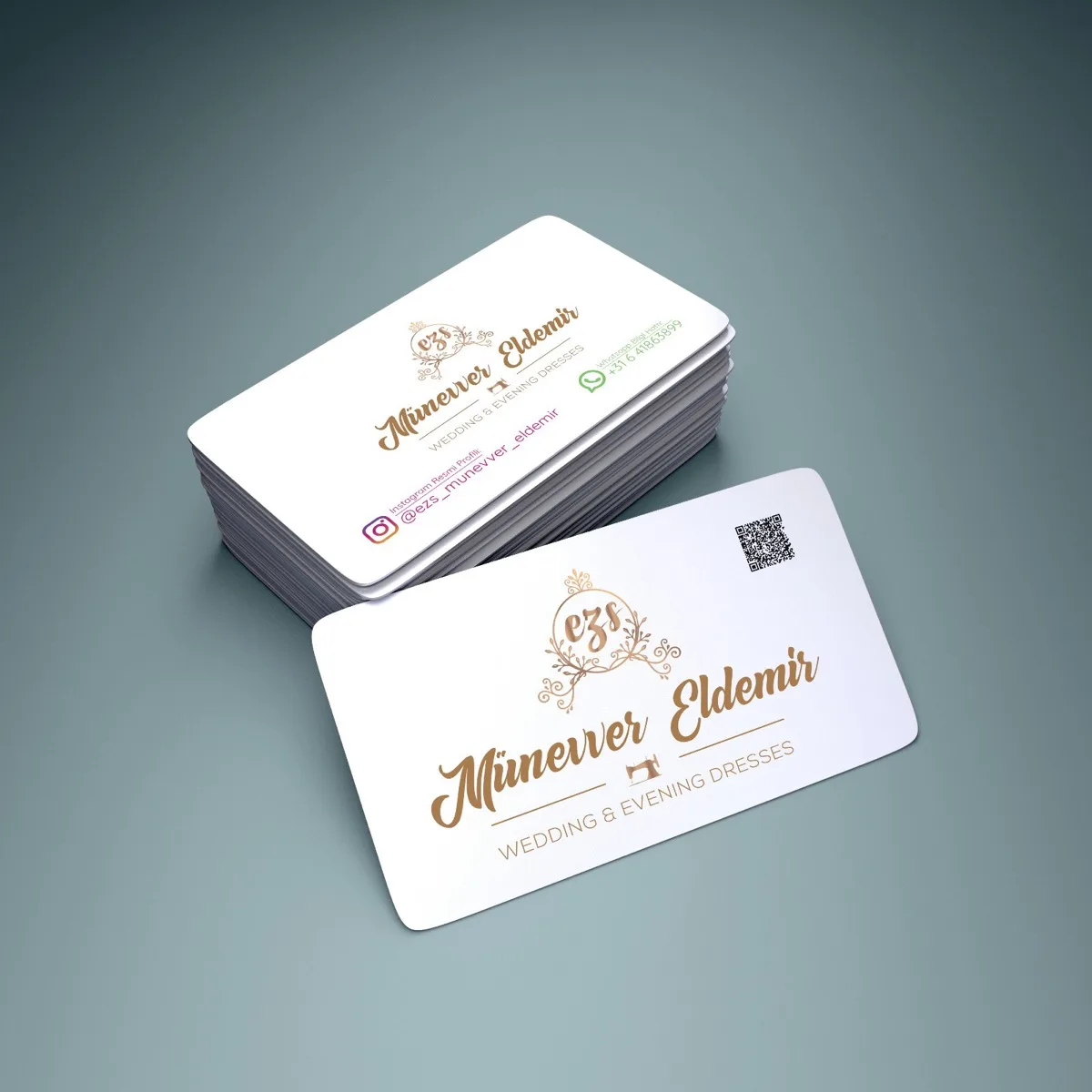
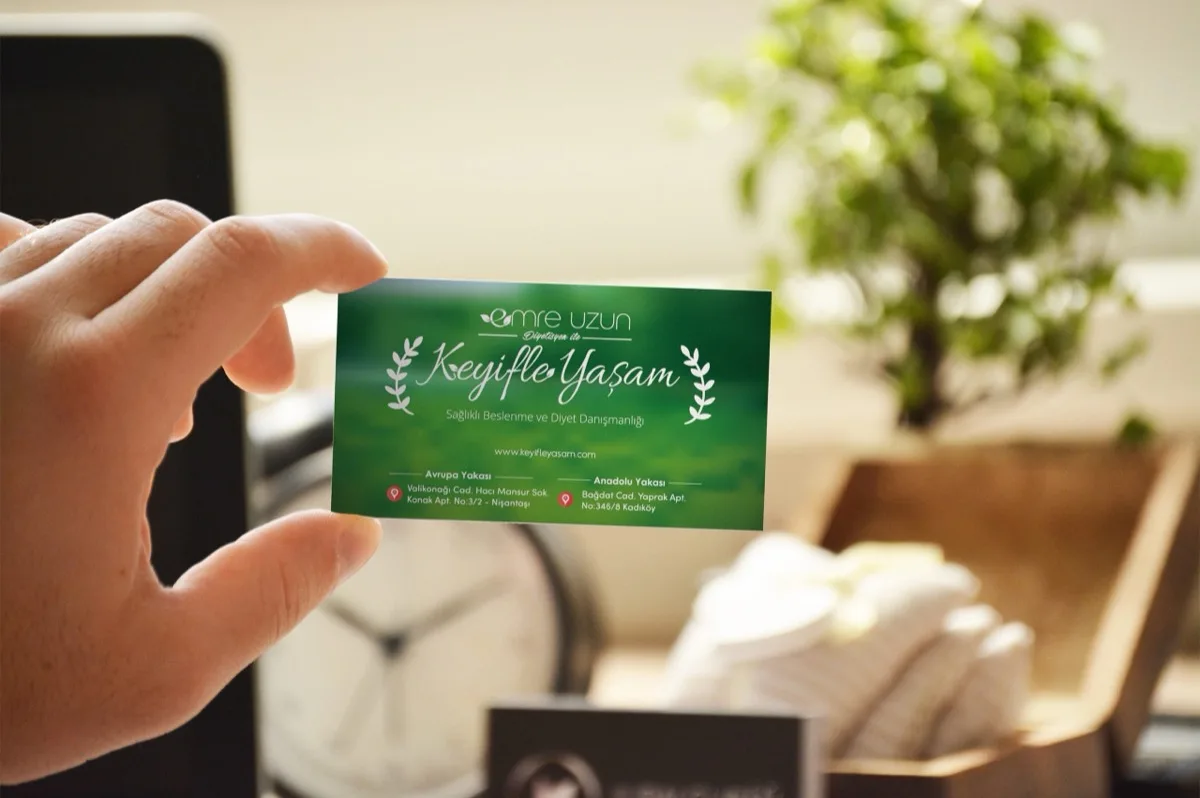
Technical options
- Common sizes
- 85 × 55 mm (standard), 90 × 50 mm (European)
- Stock
- 300–400gsm coated, bristol, kraft, textured
- Finishes
- Matt/gloss lamination, soft touch, spot gloss, emboss, foil
- Printing
- Single or double sided, four colour
Related services
Frequently asked
What weight should a business card be?
350gsm is a balanced choice for most work: it feels solid without pushing the cost up sharply. For a heavier presence, 400gsm or a duplexed two-ply construction is worth considering.
Can you print a card you did not design?
Yes. We check your file for bleed, crop marks, colour profile and resolution and bring it to print-ready condition; where something is missing we tell you what needs to change.
Should a business card carry a QR code?
It is worth it when the code leads somewhere specific. A QR pointing at a generic homepage rarely gets used; one that opens WhatsApp, a map location or a quote form is scanned far more often.
What is the standard business card size?
The most common size across Türkiye, North Cyprus and most of Europe is 85 × 55 mm. Eastern European and Russian markets typically use 90 × 50 mm, and the US standard is 3.5 × 2 inches (roughly 89 × 51 mm). Wallets and card holders are made for these dimensions, so going outside them draws attention but can make the card harder to keep.
Can you write on a laminated business card?
Ballpoint ink does not hold on a matt or gloss laminated surface and rubs away. If notes are expected on the back, that side is left unlaminated, or the coating is applied to the front only.
How long does printing business cards take?
What sets the schedule is not the quantity but the finishing. An order on standard stock with a straight cut goes into production the moment the print-ready file reaches us. Once embossing, foiling or a custom cut come in, each means a separate pass on a separate machine and the calendar stretches accordingly. We give a firm date after seeing the file and the finishes you want.
Do you ship business cards to Türkiye?
We do. Business cards are light and take little space, so carriage is rarely a decisive line in the total. The real issue here is colour consistency rather than cost: when parts of an identity set are printed in different places, the same colour reference can come out in different tones, which is why the set is usually produced from one source.
Can I see the card before it is printed?
Nothing goes to production before a proof is approved. An on-screen proof is enough to confirm layout and content, but finishes such as embossing, foiling and lamination do not show on a screen at all. Where one of those is chosen, looking at the stock itself tells you more, since the same finish feels different on a different paper.
What is the minimum quantity for business cards?
A low quantity causes no difficulty on a straight cut with standard stock; digital printing incurs no tooling cost, so the unit price does not rise disproportionately. What sets the floor is not the quantity but the finish: once embossing or foiling is involved, each brings its own set-up, and that set-up divided across a small run weighs heavily.